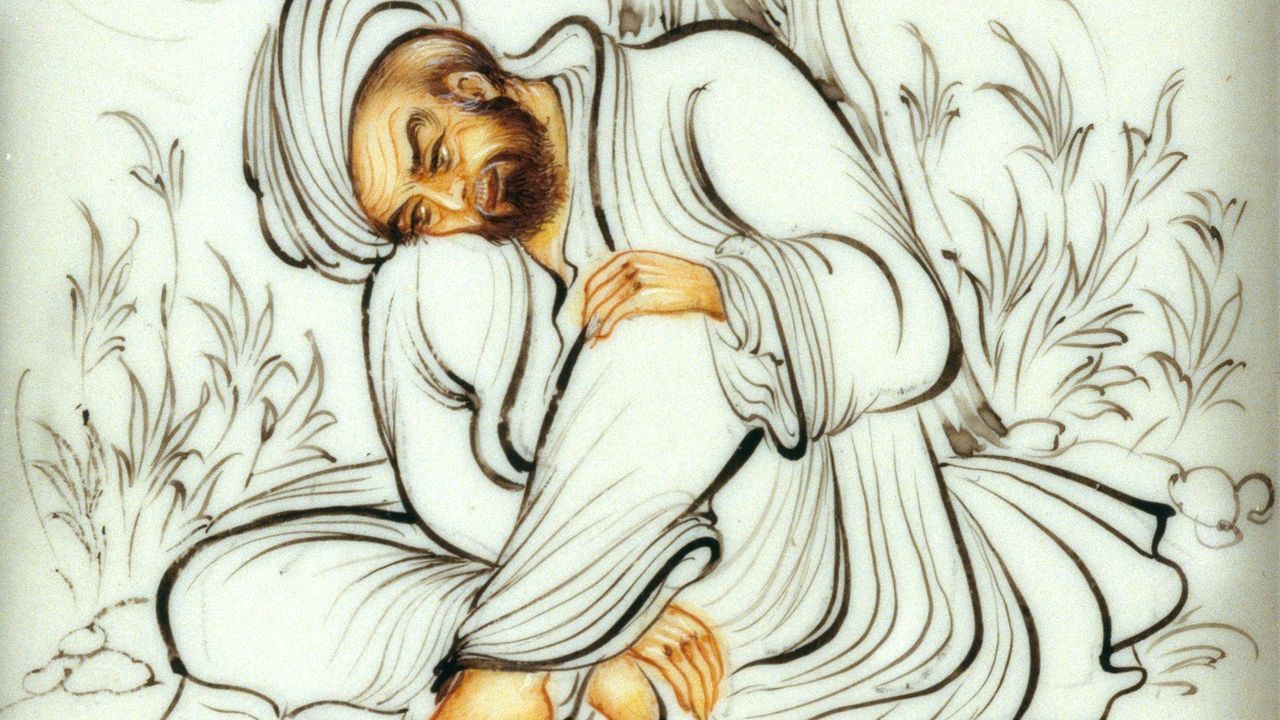
Boundless Love: The Heart's Infinite Embrace
Hafiz's assertion that "the heart knows no borders" invites us to consider the limitless nature of love and compassion. In a world often divided by boundaries—cultural, political, and personal—this quote serves as a reminder of our shared humanity. It challenges us to transcend these divisions and embrace a more profound connection with one another, suggesting that the heart's capacity for love is not confined by the limits we impose upon ourselves.
Delving deeper, we find that Hafiz's words resonate with the essence of Sufism, where love is not merely an emotion but a transformative force. This perspective encourages us to cultivate a heart that is open and expansive, capable of encompassing all beings. In doing so, we not only enrich our own lives but also contribute to a collective awakening that fosters unity and understanding in a fragmented world.
The image / the metaphor
The imagery in Hafiz's quote evokes a sense of vastness and freedom. The heart, often seen as the seat of emotion and spirit, is portrayed as a boundless entity, unconfined by the limitations of geography or ideology. The choice of the word "knows" suggests an innate wisdom, as if the heart possesses an understanding that transcends rational thought. This evokes a felt sense of warmth and openness, inviting us to explore the depths of our emotional landscape.
Metaphorically, the heart represents our capacity for empathy and connection. By stating that it "knows no borders," Hafiz implies that love is a universal language, one that can bridge divides and heal wounds. This metaphor encourages us to recognize the interconnectedness of all beings, urging us to cultivate a heart that is not only aware but also actively engaged in the world around us. In this way, the heart becomes a vessel for compassion, capable of embracing the diversity of human experience.
In the speaker's tradition
Hafiz's wisdom is deeply rooted in the Sufi tradition, which emphasizes the importance of love as a path to spiritual realization. Concepts such as *fana*—the annihilation of the self in the presence of the Divine—echo the sentiment that true love transcends individual boundaries. In Sufism, the heart is often seen as a mirror reflecting the divine, suggesting that when we open ourselves to love, we also open ourselves to a greater understanding of the universe and our place within it.
In the context of Sufi poetry, Hafiz's work can be likened to the teachings of Rumi, who similarly extolled the virtues of love and unity. Rumi's poem "The Guest House" invites us to welcome all emotions, suggesting that each experience contributes to the richness of our lives. Both poets remind us that love is not merely a feeling but a profound state of being that can transform our understanding of ourselves and others.
Living the teaching
Consider a modern scenario where this teaching resonates: a community divided by differing beliefs and backgrounds. In such a context, Hafiz's message encourages individuals to reach out with compassion, seeking to understand rather than judge. This might manifest in a simple act of kindness, such as sharing a meal with someone from a different culture, fostering dialogue and connection that transcends preconceived notions. By embodying the idea that "the heart knows no borders," we can actively participate in healing divisions and nurturing a spirit of unity.
In personal relationships, this teaching can be particularly transformative. Imagine a moment of conflict with a loved one, where misunderstandings create emotional distance. By invoking the spirit of Hafiz's words, one might approach the situation with an open heart, seeking to understand the other person's perspective. This willingness to embrace vulnerability and compassion can dissolve barriers, allowing for deeper connection and reconciliation. In daily practice, cultivating mindfulness and empathy can help us embody this teaching, reminding us that love is a choice we can make in every interaction.
A reflection
As we contemplate Hafiz's profound assertion, we are invited to reflect on our own hearts. How can we cultivate a love that knows no borders in our daily lives? What practices can we engage in to foster compassion and understanding, both for ourselves and for others? In a world that often emphasizes division, let us consider how we might embody the boundless love that Hafiz so beautifully articulates, allowing our hearts to lead us toward unity and connection.